Behavioural optometry
An extended, one-hour assessment for children who are bright but find reading, writing or copying from the board harder than they should. It looks at how the eyes work, not only how clearly they see.
- Usually one hour
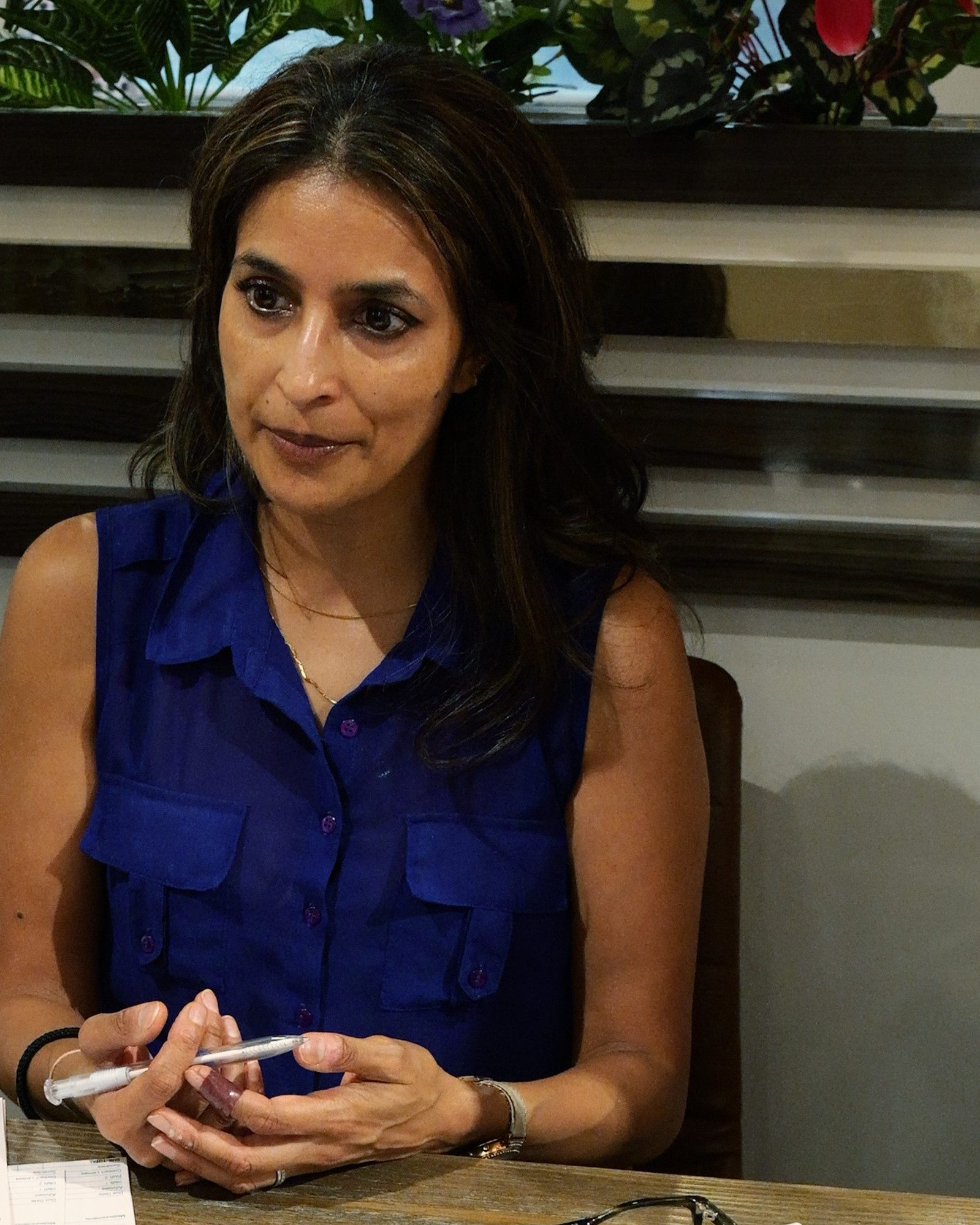
- Pooja Vardhaman is a member of the British Association of Behavioural Optometrists
- Questionnaires completed before the visit
Your appointment
- Who it is for
- Children who are bright but find reading, writing or copying from the board harder than they should.
- What happens
- An extended assessment, usually one hour, of how the eyes track, focus and work together.
- Before you come
- Questionnaires to complete before the visit. If your child finds new places difficult, call us first so we can plan the visit around them.
What we assess
- Difficulties at school: history and symptoms
- Muscle balance: whether the eyes work together properly
- Eye dominance
- Tracking: how well the eyes follow a moving object or a line of print
- Focusing for reading, and whether glasses would help
- Reading speed
- Colour preference and sensitivity to light
Visual stress
Some people find that print seems to move, blur or form patterns, and that striped patterns are uncomfortable. This is often called visual stress, or Meares-Irlen syndrome. Some find coloured overlays or tinted lenses make reading more comfortable. We only consider them after a full eye examination has dealt with any other cause.
Neurodevelopmental assessment
Alongside behavioural optometry we offer an assessment for children with developmental and learning difficulties, including eye tracking and vision and auditory therapy. We ask you to complete questionnaires first, then plan an assessment around your child.
We do not offer a diagnosis of dyslexia, ADHD or autism, and we do not claim to treat them. We look for problems with vision that may be making things harder, and explain what we find. You can read why this work matters to us in our story.
What may follow
Depending on what we find: glasses or contact lenses, exercises to practise at home, coloured filters, or a programme of vision therapy. Sometimes the answer is that your child’s vision is not the problem, and we will say so.
Questions people ask
Is this the same as a dyslexia test?
No. Dyslexia is assessed by an educational psychologist or specialist teacher. We assess vision, which is worth ruling in or out alongside it.
My child had a normal eye test. Is this still worthwhile?
A routine test measures how clearly a child sees. This assessment looks at how the eyes track, focus and work together over time, which a routine test does not cover in depth.
Book an appointment
Tell us what you need and when suits you. We confirm by email or telephone.
Monday to Saturday, 10.30am to 4pm. Other times are available by appointment.